
Ingredient Guide
Damask Rose in Skincare: Vietnam's Cao Bang Highland Bloom
· East West Supply Co.
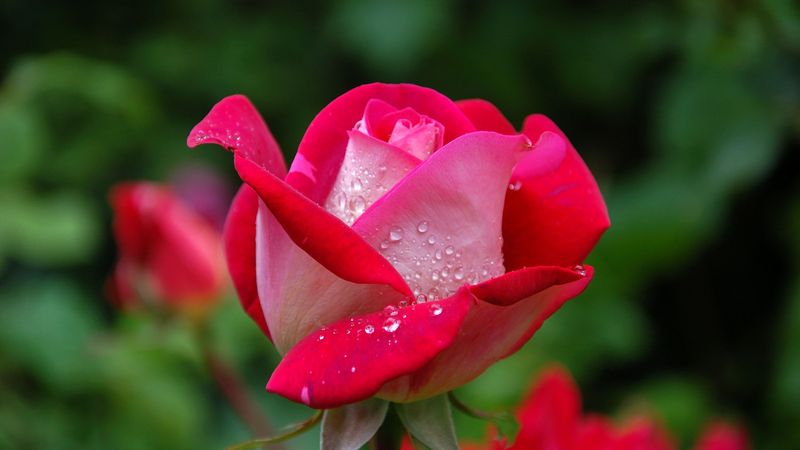
Rosa damascena in full bloom — the same species cultivated on Cao Bang's high plateau.
The Ancient Heritage of Rosa Damascena
Rosa damascena, the Damask rose, has one of the longest documented histories of any plant used in human skincare. Originating in the Middle East — most likely in the region around modern-day Damascus, Syria — it was cultivated by Persian, Greek, and Roman civilizations for its fragrance, medicinal properties, and sheer beauty. By the 13th century, Crusaders had carried Damask rose cuttings back to Europe, and by the 17th century the Bulgarian Rose Valley near Kazanlak had become the global epicenter of commercial rose cultivation.
What made the Damask rose exceptional was not just its scent but its chemistry. Steam distillation of Damask petals produces rose otto (essential oil) and rose water, both rich in geraniol, citronellol, nerol, and phenylethyl alcohol. These compounds were valued in traditional medicine long before their molecular structures were understood. Avicenna, the Persian physician who perfected steam distillation around 1000 CE, prescribed rose preparations for headaches, digestive complaints, and skin inflammation — uses that modern pharmacology has since validated.
For centuries, Bulgaria and Turkey dominated global rose production. The Rose Valley's unique microclimate — cool mornings, warm afternoons, and sandy loam soil — produced petals with high oil yields. But Rosa damascena is an adaptable species. It thrives wherever it finds the right combination of altitude, temperature variation, and well-drained soil. In the early 2000s, Vietnamese agricultural researchers recognized that several highland regions in northern Vietnam offered terroir conditions remarkably similar to the Bulgarian Rose Valley, and trial plantings began.
Those trials succeeded beyond expectations. Vietnamese-grown Damask roses produced essential oil with geraniol concentrations comparable to or exceeding Bulgarian benchmarks. The key advantage was Vietnam's longer growing season and higher humidity, which allowed for multiple harvests per year instead of the single spring harvest typical in Bulgaria. By the mid-2010s, commercial-scale Damask rose cultivation was established in several northern Vietnamese provinces, with Cao Bang emerging as the premier growing region.
Why Cao Bang Grows Exceptional Roses
Cao Bang province sits in Vietnam's far northeast, bordering China's Guangxi region. Its landscape is defined by dramatic karst limestone formations, deep river valleys, and a high plateau that ranges from 600 to over 1,000 meters in elevation. The climate is subtropical but tempered by altitude — winters are genuinely cool, with temperatures dropping to 5 to 10 degrees Celsius in December and January, while summers remain moderate compared to the sweltering lowlands. This temperature range is critical for rose cultivation because the cool-warm cycling triggers the plant to produce higher concentrations of volatile aromatic compounds as a defense mechanism.
The soil composition of Cao Bang's plateau is equally important. Limestone karst geology produces alkaline, mineral-rich soil with excellent drainage — roses despise waterlogged roots. The soil is naturally high in calcium, magnesium, and trace minerals that contribute to the phytochemical complexity of the rose extract. Local farmers have cultivated these plots for over five years using organic methods, allowing the root systems to mature and penetrate deep into the mineral substrate. Mature rose bushes with deep root systems consistently produce more potent petals than younger plants, a phenomenon well documented in Bulgarian rose farming.
Morning mist is another Cao Bang advantage. The plateau regularly experiences dense fog that blankets the rose fields from pre-dawn until mid-morning. This mist keeps the petals cool and hydrated during the critical hours when volatile compounds are at their highest concentration. Harvesters work in the early morning, picking petals by hand while the mist is still present — a labor-intensive practice that preserves the delicate aromatic molecules that would begin evaporating once the sun burns through. Each kilogram of rose petals is processed within hours of harvest to minimize compound degradation.
The organic farming practices in Cao Bang deserve emphasis. No synthetic pesticides or chemical fertilizers are used on the rose plots. Instead, farmers rely on companion planting, natural compost, and biological pest control. This matters for skincare because pesticide residues in conventional rose farming can end up in the final extract. Organic cultivation ensures that the rose extract contains only the compounds the plant produced naturally — no chemical contaminants that could irritate sensitive skin or compromise the purity of the formulation.
Cocoon Vietnam recognized Cao Bang's potential early and established direct sourcing partnerships with local farming cooperatives. This relationship ensures consistent quality, fair compensation for farmers, and complete traceability from field to finished product. Every batch of Cao Bang rose extract used in Cocoon's formulations can be traced back to specific plots and harvest dates — a level of transparency that industrial rose suppliers rarely offer.
What Damask Rose Extract Does for Skin
The skincare benefits of Damask rose extract stem from a well-studied cocktail of bioactive compounds. Tannins — the same class of polyphenols found in green tea and red wine — are present in significant quantities in rose petals. These tannins have astringent properties that tighten pores and firm the skin surface without causing dryness. They also form a thin protective film on the skin that shields against environmental pollutants and reduces transepidermal water loss, helping the skin retain its natural moisture.
The anti-inflammatory action of Damask rose extract is one of its most clinically relevant properties. Geraniol and citronellol, the two dominant monoterpenes in rose oil, inhibit the COX-2 enzyme pathway and suppress NF-kB signaling — two of the primary molecular drivers of skin inflammation. For people with rosacea, contact dermatitis, or post-procedure redness, rose extract provides meaningful calming without the side effects associated with topical corticosteroids. Multiple peer-reviewed studies have demonstrated that geraniol reduces UV-induced erythema by 30 to 40 percent when applied topically.
Hydration is another core benefit, though the mechanism differs from conventional humectants like hyaluronic acid. Rose extract contains natural sugars, glycerol, and mucilage that attract and bind water molecules to the stratum corneum — the outermost layer of the epidermis. Unlike occlusives that simply prevent water from leaving, rose compounds actively pull moisture into the skin while simultaneously strengthening the lipid barrier that prevents it from escaping. This dual-action hydration makes rose extract particularly effective for dehydrated skin that feels tight despite not being clinically dry.
The antioxidant profile of Damask rose extract rounds out its skincare credentials. Quercetin, kaempferol, and gallic acid — all present in significant concentrations — neutralize free radicals generated by UV exposure, blue light, and atmospheric pollution. More importantly, quercetin has been shown to inhibit collagenase and elastase, the enzymes that degrade collagen and elastin fibers in aging skin. This means rose extract does not merely protect against future damage; it actively slows the enzymatic breakdown of existing structural proteins, making it a legitimate anti-aging ingredient with a mechanism of action distinct from retinoids or peptides.

The misty highlands of northern Vietnam, where altitude and mineral-rich soil create ideal conditions for rose cultivation.
Building a Complete Rose Skincare Routine
The most effective way to use rose skincare is not as a single product but as a layered system where each step reinforces the others. Cocoon's rose line is designed with this layering principle in mind: a cleansing oil to prepare the skin, a serum to deliver concentrated actives, and a gel cream to lock everything in. Each product uses Cao Bang Damask rose extract as its hero ingredient, but the supporting formulations are tuned for their specific role in the routine.
Start with the Rose Cleansing Oil. Applied to dry skin, it dissolves sebum, sunscreen, and makeup through the principle that oil dissolves oil. The rose extract in the cleansing oil means that even this first step delivers anti-inflammatory compounds to the skin. Massage for 60 seconds, add water to emulsify, and rinse. Your skin should feel clean but never stripped or tight. This step is essential in the evening to remove the day's accumulation of pollutants and SPF, and optional in the morning for those who prefer a lighter start.
Next, apply the Cao Bang Rose Serum to slightly damp skin. Serums are the workhorse of any routine — their lightweight, fast-absorbing formulations deliver the highest concentration of active ingredients directly into the epidermis. The rose serum combines concentrated Damask rose extract with complementary hydrating and brightening ingredients. Pat it gently into the face and neck, allowing 30 seconds for absorption before the next step. This is where the bulk of the anti-inflammatory, antioxidant, and hydrating benefits are delivered.
Finish with the Rose Aqua Gel Cream. This is not a heavy traditional moisturizer but a gel-cream hybrid that provides substantial hydration with a weightless finish. The gel texture makes it ideal for humid climates and oily skin types — it hydrates without adding greasiness or clogging pores. The rose extract in the gel cream provides a final layer of anti-inflammatory and antioxidant protection while the occlusive elements seal in the serum underneath. In the morning, follow with sunscreen. In the evening, the gel cream is your final step.
The three-product rose routine — cleansing oil, serum, gel cream — replaces what would otherwise be five or six separate products: makeup remover, cleanser, toner, treatment serum, and moisturizer. Each step does double duty because the rose extract provides active benefits alongside its primary function. This streamlined approach aligns with the Vietnamese beauty philosophy of effective simplicity — fewer products, better ingredients, consistent results.
Shop Cao Bang Rose Skincare
Formulated with organic Damask rose from Cao Bang's high plateau. Vegan, lightweight, and gentle enough for sensitive skin.

A complete rose routine: cleansing oil, serum, and gel cream work together for calm, hydrated skin.
Shop the Sensitive Skin Collection · Shop Skincare · Rose Water Skin Benefits · How to Layer Skincare · More Articles